Frontline Care to Future Doctor: Jada Pierro’s Journey from CBU to CBMC
Date Posted: Nov 25, 2026


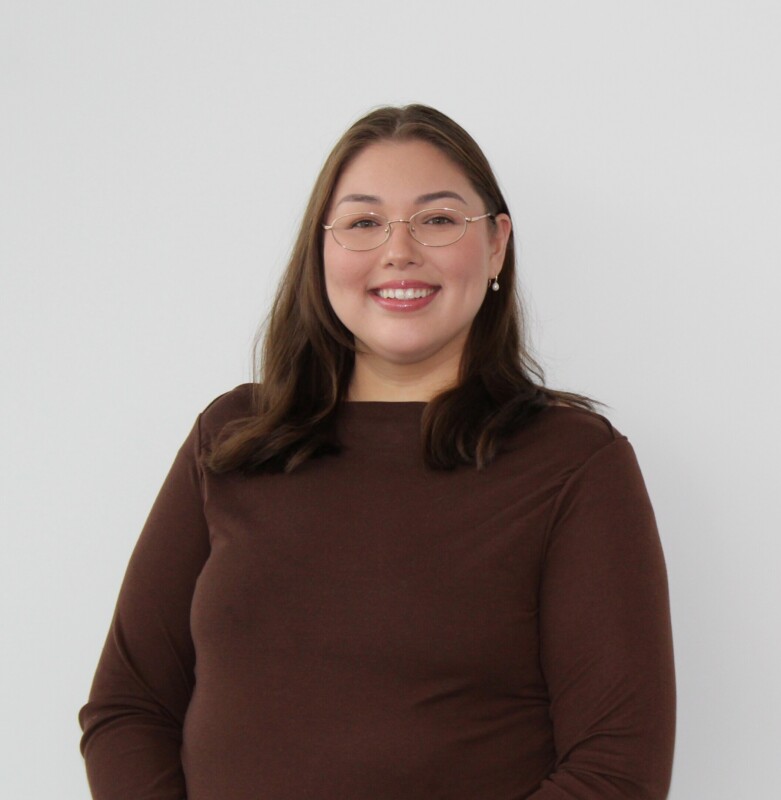 Between a three-hour daily commute, two young children at home and a demanding routine of lectures, Jada Pierro knows exactly what it means to carry a full plate.
Just one year after crossing the convocation stage alongside her sister, Shareeve Gould, to graduate from Cape Breton University’s (CBU) Bachelor of Science, Nursing Program (BScN), Jada is back on campus, trading her nurses scrubs for medical textbooks as a first-year student at the Cape Breton Medical Campus (CBMC).
From the Clinic to the Classroom
While the past 12 months brought marriage, milestone family moments and full-time work as a community health nurse in We’koqma’q, where Jada now lives, she never lost sight of where she wanted her path to lead. During her year working in community health, Jada built deep relationships with patients and frequently discussed the realities of frontline care with Shareeve, who had gone straight into medical studies at Dalhousie University upon graduating.
“Working this past year truly solidified my passion for community health, for Indigenous health,” Jada says. “Being able to actually work as a nurse and to be hands-on, to know your patients, to almost become like a part of their family unit. It’s not just a patient, it’s someone’s aunt, it’s someone’s uncle, someone’s daughter. I realized just how much I care for the health and well-being of the community and I’m very honoured that I get to be in these positions and that I get to be someone going into unknown territory, just as I did with nursing.”
Now training to become a family physician at CBMC, Jada is channeling her frontline experience and deep cultural grounding to improve care for First Nations communities. Recognized for that vision as the recipient of the Chief Terry Paul Medical Leadership Award, Jada is showing that advancing your education does not have to mean leaving your family, culture or home behind.
The Path Revealed
Deciding to take that step, however, was not an easy decision. Even after experiencing the impact of community nursing firsthand, Jada questioned whether applying to medical school was her own ambition or if she was just following the trail Shareeve had already blazed.
“During the application process I was still quite unsure,” Jada says. “I was like ‘Is this my path, or am I just trying to follow my sister?’”
The turning point came when the sisters were invited to return to their former high school, Alison Bernard Memorial High School (ABMHS) in their home community of Eskasoni, to address the graduating class. Standing on the stage and looking at a crowd of young grads full of hope and potential, her hesitation vanished.
“Getting to speak to them, in my own high school where I graduated from, I thought ‘this is where I’m meant to be,’” Jada says. “Looking down at those kids, I thought of all the other kids that I can help, that I can talk to, that I can be a mentor to. Going into nursing, I never saw myself being an inspiration or a role model, but that moment really solidified that I was confident in myself and my path.”
Speaking to those students also reinforced a lesson Jada had spent years learning for herself: success does not follow a single formula or timeline. Every obstacle she overcame in her own path had prepared her to advocate for her community on a larger scale. While nursing gave her a frontline view of patient care, Jada realized that addressing the health discrepancies facing Mi’kmaw communities required intervening where care begins.
“When you think of a problem, you go back to the root,” Jada says. “Working as an Indigenous physician in Indigenous communities is where I feel I’m going to be able to make the most change, because that’s what I’m so passionate about. That’s what led me to want to study family medicine.”
A Chance Close to Home
Taking on that responsibility, though, hinged on one critical factor: location.
For Jada, packing up and relocating to Halifax or beyond for medical school was never an option. Deeply anchored in her family and community, moving would have meant uprooting her husband and young children, distancing them from their Mi’kmaw culture, family and support systems. The establishment of the Cape Breton Medical Campus changed the equation entirely. Created as a pathway to train physicians in and for rural communities, the partnership between CBU and Dalhousie University offered Jada a realistic path to an MD while remaining close to home.
“Being able to work with family doctors here and being able to do electives in this area teaches me so much more,” Jada says. “It’s helping me build the foundation that I need to truly provide culturally competent, culturally safe and community-driven rural healthcare.”
While that foundation is taking shape in lectures and labs, its biggest impact is being felt right at home. With her family’s full support in her return to academics, Jada says her home has turned her medical studies into an everyday part of family life. Subjects from the CBMC classroom frequently make their way into impromptu health science classes at home!
Being the Representation
“My husband was over the moon and my daughter is now solidified in her want to become a doctor,” Jada says. “One day I had a whiteboard out and completely drew the skeletal system by memory and taught my kids the skeletal system. I’ve been teaching them neck exams, listening to the heartbeat and getting them to understand the basic concepts of medicine and the science that goes on in our bodies.”
“They love it!” Jada continues. “I was like, ‘Do you see this cell? This is called a squamous cell. Our bodies are made up of these.’ It’s so surreal to see my daughter truly dreaming, truly feeling like nothing is too big and that she’s capable, all because she’s seen me doing it.”
That influence has even extended beyond her home and into the wider neighbourhood, where local children view her both as the person to run to for bumps, scrapes and medical advice and also as a role-model and proof that the sky is the limit. One morning as Jada rushed out the door for her hour and a half drive to the CBMC, her neighbour’s young daughter called out to say that she wanted to be a doctor just like her. She says the moment served as another reminder of the power of representation.
“It’s so surreal,” Jada says. “It almost brings me to tears how grateful I am to be in this spot, being able to be the representation is truly an honour that I can’t fully describe.”
Looking Forward
Looking toward the future, Jada hopes to see a healthcare system where Indigenous representation reaches into every corner of medicine, from clinical specialties and academic research to residency training and beyond.
“In the next 10 years I hope to see a lot more Indigenous physicians and to have an Indigenous family medicine registry in the area,” Jada says. “It’s about having real representation across the board. We need Indigenous pediatricians, dermatologists, medical researchers and specialists in every single field.”
As she continues to balance the demands of medical school, family and the daily drive between We’koqma’q and Sydney, Jada credits the support of her community, Unama’ki College and Cape Breton University with keeping her on track and grounded.
“It’s my family and community at home, the community of students and faculty at CBU and the places like Unama’ki College; without those supports, without that community, I don’t think I’d be where I am today,” Jada says. “It’s having that reminder of ‘No, you’re doing good. You’re okay, keep with it.’ It’s something that you need to be able to succeed in something like medicine. You need that community. You need that village.”