A Family Legacy of Stewardship: Kristina Denny’s CBU Story
Date Posted: May 12, 2026


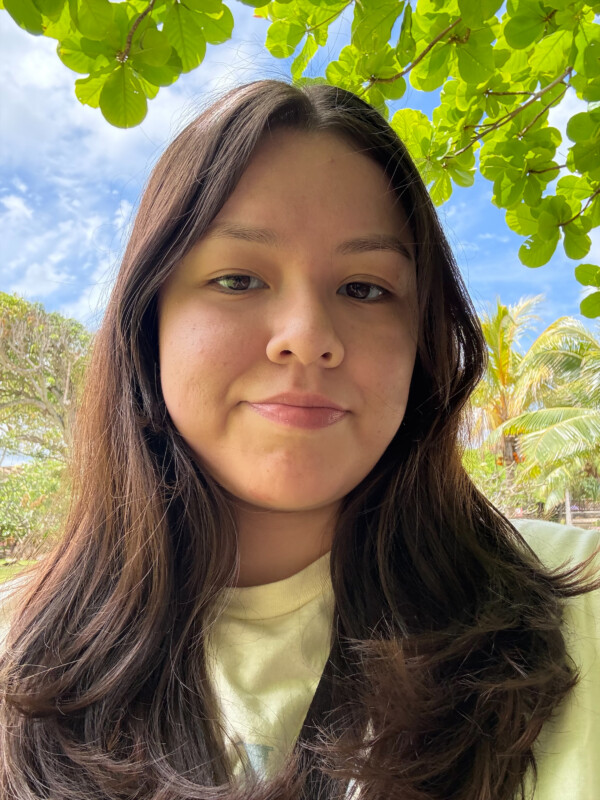 Finding a sense of purpose can be a daunting journey, especially when you’re searching for a path that honours your personal passions, generational wisdom and cultural heritage. For Kristina Denny, that search initially left her feeling adrift in her post-secondary studies.
“Before I was enrolled in the BASE program, I always felt there was something missing, and I lacked a sense of belonging,” Kristina says. “When I discovered the BASE program, I felt happier and more relieved to finally understand that this is the career path that I belonged to.”
Kristina, now nearing the end of her studies, is preparing to take the stage at the 2026 Cape Breton University Spring Convocation at the Kehoe Forum this May. The 23-year-old from Eskasoni First Nation will be the first Indigenous woman to earn her Bachelor of Arts and Science in Environment (BASE) degree, with dual concentrations in both environment and psychology.
Carrying the Responsibility
Kristina’s chosen field is deeply influenced by her family history and intertwined with an innate sense of duty to the land. Kristina grew up under the profound influence of her grandfather, the late Chief Charlie Joe Dennis, Chief of Eskasoni from 2006 to 2010 and a pioneering figure who helped found crucial organizations like the Bras D’Or Lakes Collaborative Environmental Planning Initiative (CEPI) and the Unama’ki Institute of Natural Resources (UINR). This lineage instilled a deep, personal obligation to the natural world and to the principles her grandfather espoused.
“Growing up, I always looked up to my late grandfather, Charlie Joe Dennis, and for years I understood that protecting the environment is a responsibility, not just a career. His work with CEPI and UINR showed me the importance of collaborative planning and Two-Eyed Seeing,” Kristina says. “It has inspired me to want to continue that work and pursue a career where I can use both Western science and Mi’kmaw traditional knowledge to ensure sustainability for the land.”
To effectively carry that stewardship forward, Kristina realized she needed to understand not just the environment itself, but the population interacting with it. That realization prompted her to integrate psychology studies into her environmental education, too.
“I chose to add a concentration in psychology because I wanted to learn about human behaviour and how it affects environmental change,” Kristina says. “I believe that my background in psychology has definitely bettered my understanding of environmental issues. If we understand how people are affected by their surroundings and what motivates them to act, we can create more strategies for protecting the land.”
Academic Application and Mentorship
This interdisciplinary approach quickly translated into tangible academic research. Kristina worked as a Research Assistant alongside the Purdy Crawford Chair in Aboriginal Business Studies, Dr. Mary Beth Doucette, on a Net Zero Atlantic project investigating how rural and Mi’kmaw communities fit into broader energy adaptation strategies. This hands-on experience revealed to Kristina how culturally informed infrastructure directly benefits community well-being.
“My biggest takeaway was seeing how architectural and environmental design can directly improve people’s quality of life. Researching how sustainable housing can be both culturally appropriate and energy-efficient felt very eye-opening,” Kristina says. “Dr. Doucette’s mentorship has been everything. Working with Dr. Doucette gave me the confidence to apply my research skills to my future career path. Having mentors who encourage you to explore your specific interests makes the journey feel so much easier and rewarding.”
Advice for the Next Generation
Drawing from her own early experiences of trying to find her footing, Kristina offers reassuring guidance for incoming Indigenous students navigating their university transitions. She emphasizes the importance of patience and finding an environment that wholly respects their cultural identity.
“My biggest piece of advice is to be patient with yourself and stay open to new career paths. It is okay to not have it all figured out right away. I would also suggest seeking out professors and mentors who will value your perspectives as a L’nu student,” Kristina says, crediting her own achievements to the faculty who guided her and the alignment she found between her studies and her roots.
“I certainly would not have been able to succeed well enough without the mentors and professors who helped me throughout my journey. I truly believe in finding a field that aligns with who you are as a person. When your studies connect with your values and identity, your academic journey becomes more fulfilling.”
Looking Ahead
As she prepares to step off the convocation stage and into her professional career, Kristina is focused on ensuring that environmental policies are heavily informed by Indigenous voices. She plans to leverage her educational background to honour her grandfather’s legacy through the lens of Two-Eyed Seeing.
“After graduation, I’m excited to continue working in the environmental field and focus on projects that advocate for Mi’kmaw perspectives in environmental policy and help create sustainability that is rooted in my culture,” she says. “Whether that’s through further research or working with community organizations.”
Congratulations to Kristina Denny and the entire Spring 2026 graduating class!