CBU Education Researchers Facilitate National Youth Climate Policy Briefings
Date Posted: Jun 11, 2026


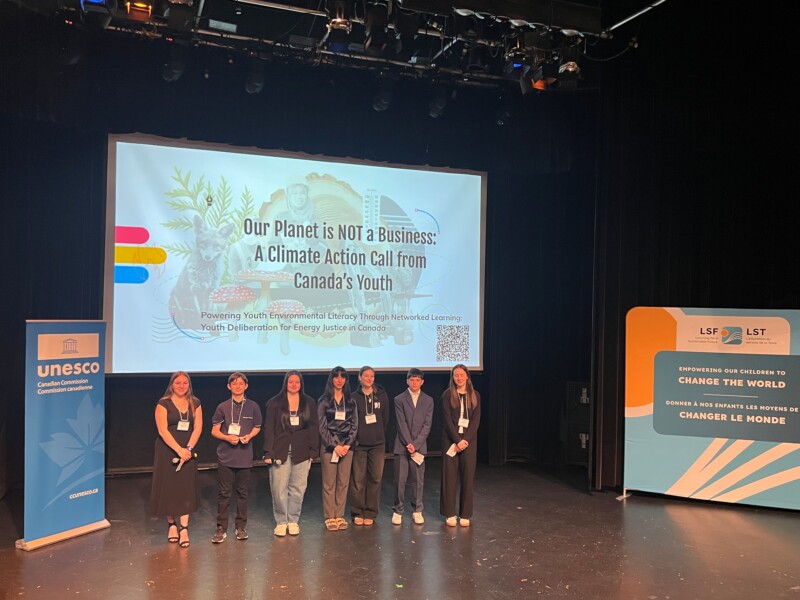 On May 29, 2026, a small delegation of high school students walked into the Place Vincent Massey building in Gatineau, Quebec, headquarters to Environment and Climate Change Canada, carrying a message that caught federal decision-makers completely off guard. They weren’t there in the Capital for an educational tour; instead, they handed officials their 20-page brief on their own policy recommendations: Our Planet is Not a Business – A Climate Action Call from Canada’s Youth.
The presentation marked the culmination of a year-long initiative that brought together hundreds of high-school students and teachers from across Canada. To guide this massive participatory research network through its final stages, Dr. Carrie Karsgaard, Assistant Professor of Education at Cape Breton University, collaborated with research colleagues Drs. Lynette Shultz and Sheena Wilson from the University of Alberta as part of a multi-institutional academic team.
Bridging Regional Realities
To build a unified national framework, these 14- to 17-year-old delegates first had to reconcile the vastly different ways environmental degradation impacts Canadian communities. Sitting together in intense drafting sessions, they shared localized emergencies from their respective home regions.
“Sharing climate experiences across Canada, I think, made them realize what an important issue this is to the lived experiences of young people, which are not always recognized in the media,” says Dr. Karsgaard. “They talked about how here (in Atlantic Canada), for example, we have warming oceans, we’re seeing visible changes to the lobster fishery, and lobster shells are not the same thickness that they used to be. Out west, there are wildfires proliferating, and there are impacts on agriculture in the prairies.”
Through the collaborative process, students like Gavin Lee learned how similar solutions can address many different challenges across regions.
“The opportunity to collaborate nationally made me realize that despite our regional differences, our climate goals are completely aligned,” says Gavin
These heavy, honest conversations also forced the youth to grapple with what a “just transition” really means for regular Canadians working in traditional industries. The resulting policy paper went far beyond standard conservation rhetoric, taking an unexpected stand against modern technological expansion. The delegates explicitly targeted the expansion of artificial intelligence infrastructure, citing both localized environmental impacts and harms to youth mental health.
“There’s a line in their policy paper that says to ‘bury AI,’” Dr. Karsgaard says. “They see the learning and mental health harms of artificial intelligence as well as the climate harms around them.”
 Two Twinned Projects, Two Distinct Visions
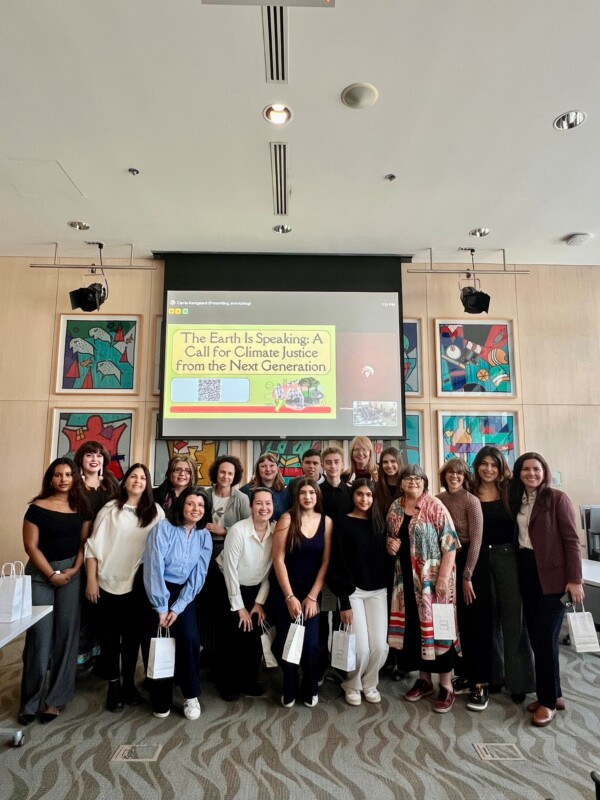
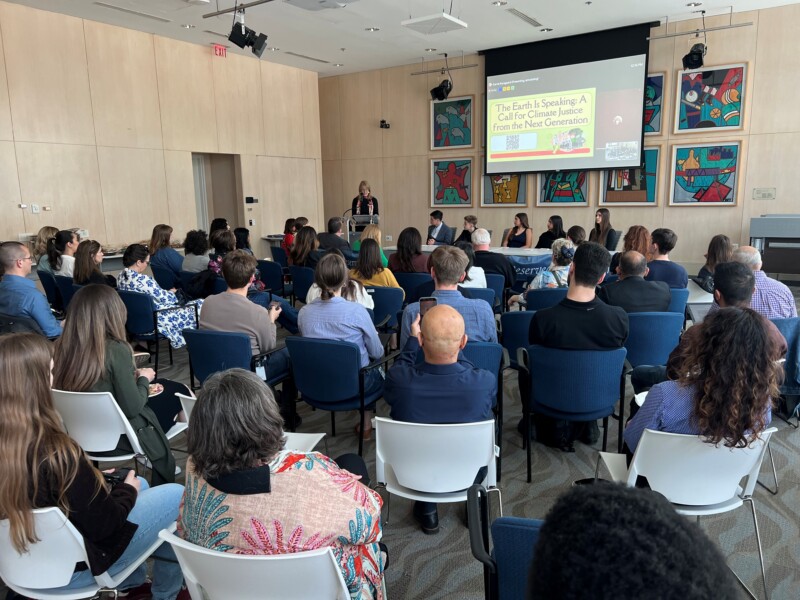
The youth presentation in Gatineau followed a separate, twinned project led by the same research team. This parallel international cohort brought their own distinct fight straight to City Hall in Edmonton on May 6, 2026, where students representing 12 schools from 11 countries defended a separate policy paper: The Earth is Speaking: A Call for Climate Justice from the Next Generation. Municipal leaders tested the international youth with tough, probing questions about colonialism, the scale of economic transition and the intense pushback from the fossil fuel sector.
“They had strong statements about how corporations need to be called to account,” Dr. Karsgaard says. “I would say they handled the questions better than I would.”
From Theory to the Field
As the project moved from months of online collaboration into these intense, face-to-face presentation settings, CBU graduate student Lily Woods stepped into a critical role on the ground. Enrolled in CBU’s Master of Education in Sustainability, Creativity and Innovation (SCI) program, Lily served as a primary research assistant and was the sole CBU student deployed alongside the University of Alberta team, travelling to both Edmonton and Ottawa to help the teenagers navigate the bureaucratic hurdles of policy presentation.
For Lily, transitioning from her own desk-bound studies to helping coordinate across these national and international networks provided a profound shift into research-based field operations. The experience exposed a stark divergence in how different student populations conceptualize global crises and revealed how structural privilege can cloud local environmental awareness.
“Canadian students shared that their classmates were hesitant, or even disbelieving, in the climate crisis. We didn’t hear this as much in the international project,” Lily says. “As written about in their policy paper, Canadian youth feel a disconnect from the effects of climate change. Privilege often means they don’t see the effects in their own lives.”
 This insular perspective stood out sharply against the global cohorts, whose clarity about the crisis was driven by immediate, unignorable environmental shifts in their home territories. In listening to the domestic delegates, Lily also observed how Canada’s deep-rooted historical reliance on fossil fuels directly shaped the Canadian students’ narratives.
“I wonder if our international students were more certain that climate change is real and a pressing issue, seemingly because they see the effects in real-time,” Lily says. “And then, of course, colonialism led to petroculture becoming a defining part of what Canada is today. I heard and saw this in the youths’ stories and voices.”
Beyond the conceptual and theoretical insights, the field experience also challenged traditional pedagogical structures. Looking at the process through the lens of her own graduate studies in sustainability and creativity, Lily observed that breaking away from rigid classroom limits allowed high school students to rapidly develop complex, professional literacies that standard essay constraints frequently stifle.
“Canadian students often get stuck in the ‘intro, 3 points, conclusion’ paragraph layout that they learned in their own schools,” Lily says. “This project allowed them to write in a way that is more realistic for their future studies and jobs.”
Learning to negotiate professional, real-world texts under high-stakes conditions fundamentally changed participants’ views of their own ability and agency. That collective drafting process built a deep sense of shared capability that outlasted the intense week in Ottawa.
“Meeting new people from across the country to collaborate on climate action completely changed my perspective on what we can achieve together,” says one of the participating students, Alexis Franzen.
 Validation on the Political Stage
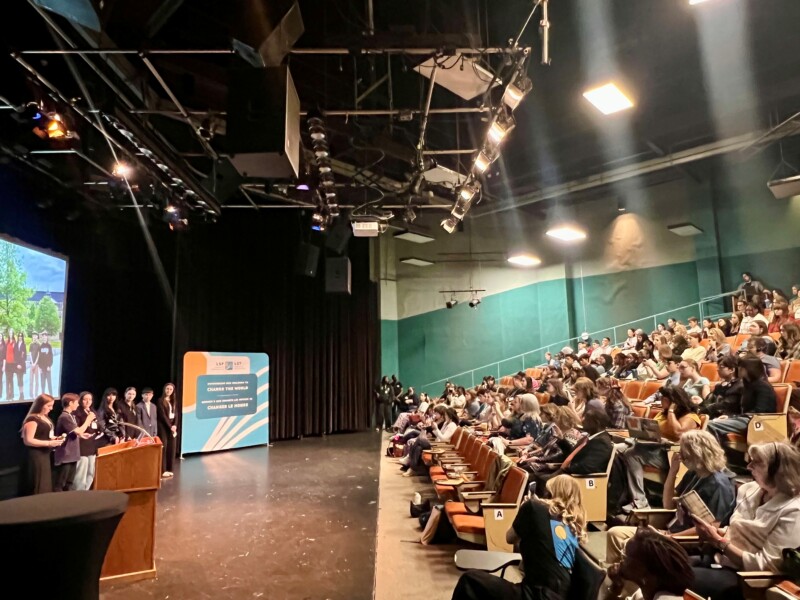
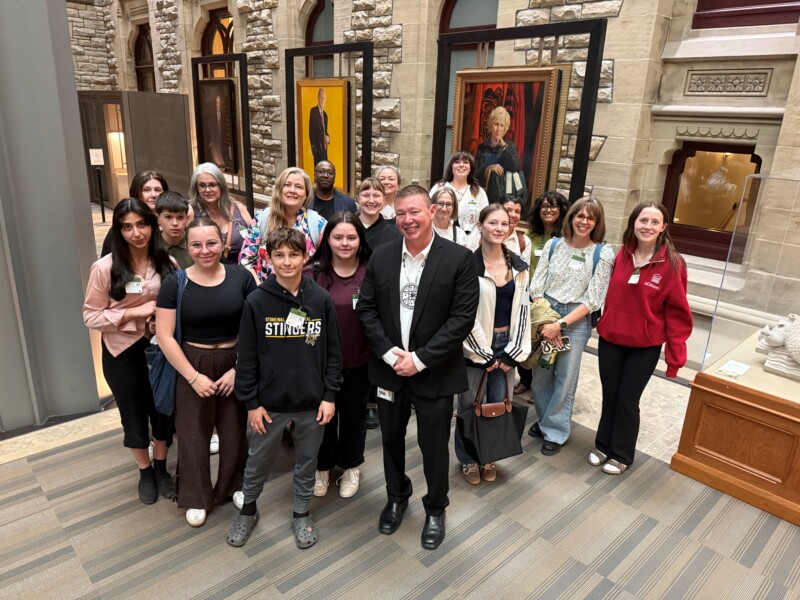
The Canadian student representatives fully stepped onto the national political stage on the morning of the Ottawa presentations. Before arriving at Environment and Climate Change Canada that afternoon, the youth delivered a presentation at a conference hosted by Canadian Commission for UNESCO and Learning for a Sustainable Future, drawing hundreds of educators and peers and earning a standing ovation.
Further validation of the national research came during a face-to-face meeting at Parliament with the Member of Parliament for Cape Breton-Canso-Antigonish, Jaime Battiste. The students discovered that their independent recommendations closely mirrored existing legislative efforts, including Battiste’s prior work on environmental warning labels on consumer packaging.
“They heard their recommendations echoed by a policymaker, which I think made them realize that their ideas were valid and strong and that they did have things of value to say back to policymakers,” Dr. Karsgaard says.
The Next Wave of Youth Advocacy
Reflecting on the immense coordination required to bring these policy papers to fruition, Lily offers direct guidance for those looking to bridge the gap between academic theory and community action.
“Listen to youth,” Lily says. “They care, have innovative and creative ideas and can make real impacts.”
Armed with completed briefs, formalized presentations and digital communication toolkits, the youth delegates have returned to their respective home regions. They are now preparing to stand before their own municipal councils, school boards, regional ministries of education and more, to demand localized change. Concurrently, the network of secondary school teachers embedded in the project is working to integrate these co-created materials back into local classrooms for the upcoming academic year, ensuring this new model of civic advocacy continues to grow.