Beaton Institute Window Bios
Dr. Clotilda Douglas-Yakimchuk, CM, ONS (1932–2021)
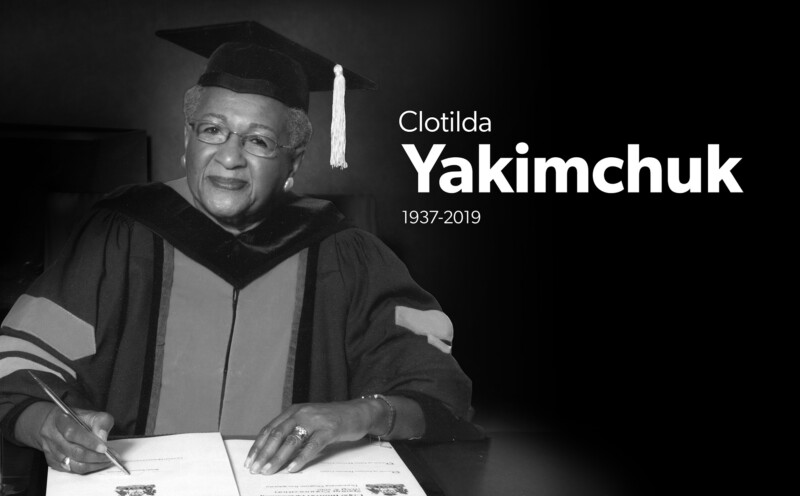
Clotilda Douglas-Yakimchuk dedicated her life to family, community service, education and nursing. In 1954, Clotilda became the first Black graduate of the Nova Scotia Hospital School of Nursing. She later earned Post-Graduate Certificates in Midwifery and Psychiatric Nursing, and a diploma in adult education from St. Francis Xavier University. In 1988 she became the first ever and to date, the only elected Black president of the Registered Nurses’ Association of Nova Scotia, now called the College of Nurses which is more than 100 years old. She was a recipient of the College of Registered Nurses Association of Nova Scotia Centennial Award of Distinction and received an Honorary Diploma from the Nova Scotia Community College. Not surprisingly, it was her vision and advocacy that led to the University offering its own nursing degree.
Referred to as the “Pride of Whitney Pier”, Douglas-Yakimcuk was recognized for her extraordinary contributions to community, life-long learning, housing, seniors, healthcare, and human rights. She is a recipient of the Order of Nova Scotia, Order of Canada, Honorary Doctor of Laws, Tom Miller Award, Harry Jerome Award, Queens Diamond Jubilee Medal and numerous others. Clotilda graciously forwarded the proceeds from the sale of her book, Reflections of Care: A Century of Nursing in Cape Breton to fund an award for nursing students at CBU. Clotilda Douglas-Yakimchuk’s legacy continues to inspire through her demonstration of leadership, perseverance, and belief in the power of education and service to transform lives. She firmly believed that “success is measured by the overall health of the community.”
Jim and Roma Kehoe
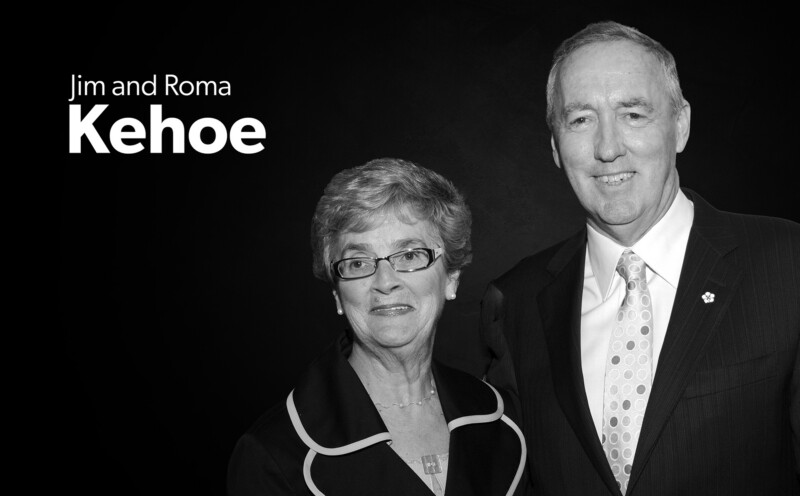
Born and raised in Cape Breton, Jim and Roma Kehoe dedicated their lives to education, entrepreneurship, and community service. Roma graduated from Nova Scotia Normal College and taught French at Colby Elementary School for more than 30 years, while Jim began his career as an apprentice carpenter before co-founding Joneljim Construction and building a successful portfolio of businesses across Cape Breton and Nova Scotia.
Together, the Kehoes spent decades volunteering with non-profit and charitable organizations focused on healthcare, education, and vulnerable populations. Roma helped establish and support organizations including the Cape Breton Regional Hospital Foundation, Hospice Palliative Care Society of Cape Breton, the Festival of Greens Holiday Gala, Big Brothers Big Sisters, and the Catholic Women’s League. Jim served in leadership roles with the Cape Breton Regional Hospital Foundation, Cape Breton University, the Sydney and Area Chamber of Commerce, and many other organizations that advanced education, healthcare, and economic development.
In 2002, Jim was one of a group of 10 individuals to first be inducted into the Order of Nova Scotia. Jim was also awarded an honorary doctorate from Cape Breton University in 2018. Roma was inducted into the Cape Breton Philanthropy Hall of Fame in 2023, a year before her death in September 2024. Their shared legacy of generosity, leadership, and service has enriched countless lives and continues to inspire future generations. At Cape Breton University, the Kehoe Forum is the official Home of Women’s Hockey, and carries the Kehoe name to recognize Jim and Roma’s long-time commitment and generosity to CBU and the Cape Breton Community.
James Otis “Jim” St. Clair (1930–2021)
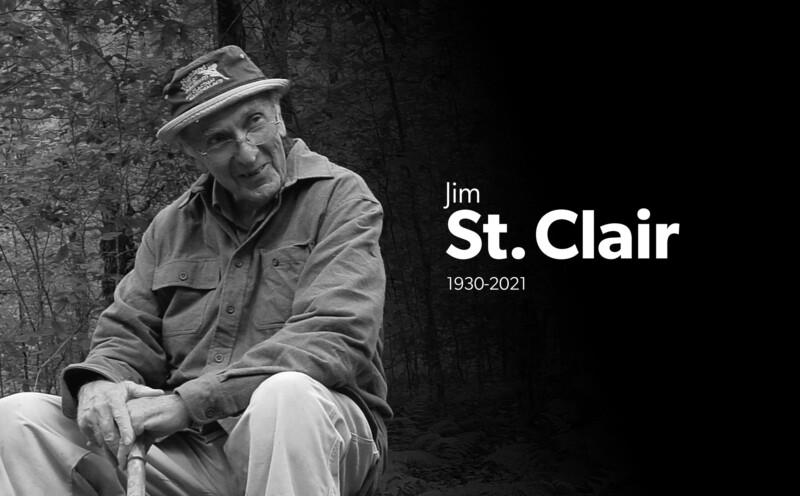
Born in Lynn, Massachusetts, and raised with deep family roots in Mull River, Inverness County, Jim St. Clair devoted his life to preserving the history, genealogy, and cultural traditions of Cape Breton Island. A graduate of Harvard University, he taught in the United States before moving to Cape Breton, where he inspired generations of students at Mabou Consolidated School and Cape Breton University. He also worked with A.W.R. MacKenzie at Colaisde na Gàidhlig/The Gaelic College.
A gifted storyteller and genealogist, Jim became one of Cape Breton’s foremost authorities on family history. For more than thirty years, he shared the island’s past through CBC Radio’s Then and Now and his history column in The Inverness Oran and Victoria Standard, bringing to life early settlers, local characters, and significant events while connecting history to contemporary life. Beyond his writing and teaching, St. Clair was a tireless advocate for heritage preservation.
Jim helped found or lead numerous organizations, including the Mabou Gaelic Historical Society, and served on the boards of Baile nan Gàidheal/Highland Village Museum, the Nova Scotia Museum, and co-founded the Iona Connection in 1987, now a heritage co-operative of more than sixty member institutions. He also helped protect his family’s 300-acre woodland as the MacFarlane Woods Provincial Protected Area. An active member of the Inverness-Guysborough Presbytery of the United Church of Canada, Jim’s scholarship, mentorship, and unwavering commitment to community ensured that the stories, people, and traditions of Cape Breton would be preserved for future generations.
Joan E. Harriss (1919–2001)
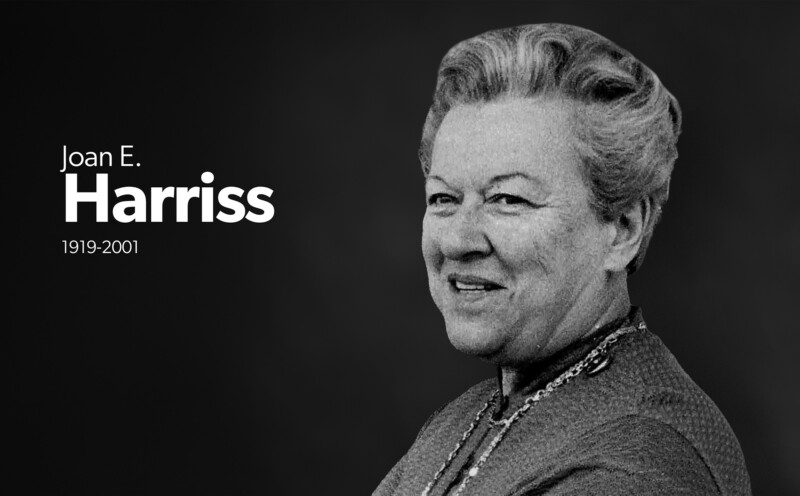
Joan E. Harriss was a innovative entrepreneur, tourism promoter, and champion of Cape Breton’s heritage. Born into a family with deep roots in Sydney’s marine, insurance, and travel businesses, she worked alongside her father, Roy Young, before independently operating the family business. She was married to Victor J. Harriss of Harriss General Contractors.
Joan helped establish Cape Breton’s cruise industry, taking over her father’s operation that brought the first cruise ships to the region in 1964. She also served as Norwegian Vice-Consul for 25 years. A passionate heritage advocate, Joan purchased and established Jost House. She helped develop heritage walking tours, fund heritage projects, and worked to save and restore Sydney’s historic Lyceum building. Active in numerous community organizations, she also served as President of the Business and Professional Women’s Club.
A generous benefactor of the Beaton Institute, Joan helped preserve Cape Breton’s history and culture for future generations. In recognition of her contributions, she received an honorary Doctor of Letters from Cape Breton University in 1998.
Nancy Dingwall (1953–2023)
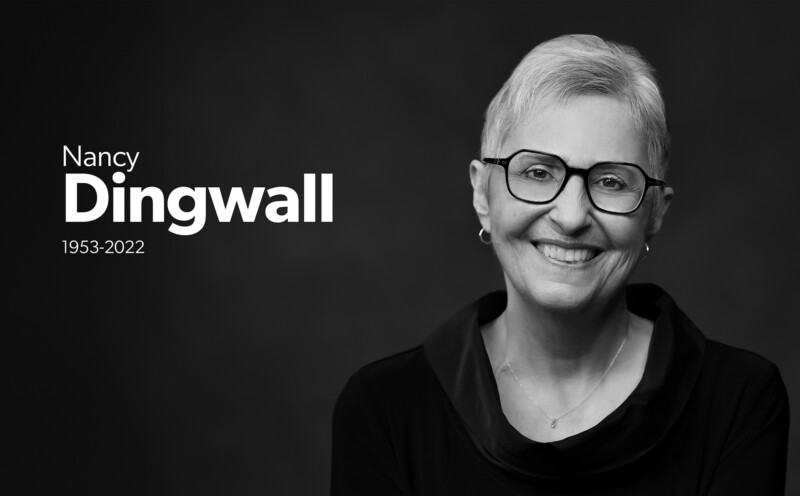
Born in Sydney, Nova Scotia, Nancy Dingwall (née Abbass) devoted her life to caring for others. A graduate of Holy Angels High School and Queen’s University, she began her career as the physiotherapist for CAPERS Athletics and Cape Breton University (then UCCB) in 1980. Nancy cherished her family, and together with her husband David, raised three children. For more than 33 years, Nancy provided care to student-athletes, students, and members of the wider community, earning a reputation for her compassion, professionalism, and patient-centred approach.
Following her retirement in 2013, she continued to serve the community through the boards of the Cape Breton Regional Hospital Foundation and Hospice Cape Breton. A familiar presence at CAPERS events, she was named Honorary Chair of the 2021 U SPORTS Women’s Soccer Championship, and in 2022 the university renamed its Health and Counselling Centre in her honour. Remembered for her generosity, quiet leadership, and unwavering commitment to the well-being of others, Nancy Dingwall’s legacy continues to inspire the Cape Breton University community and beyond.
Patrick Johnson (1948-2026)
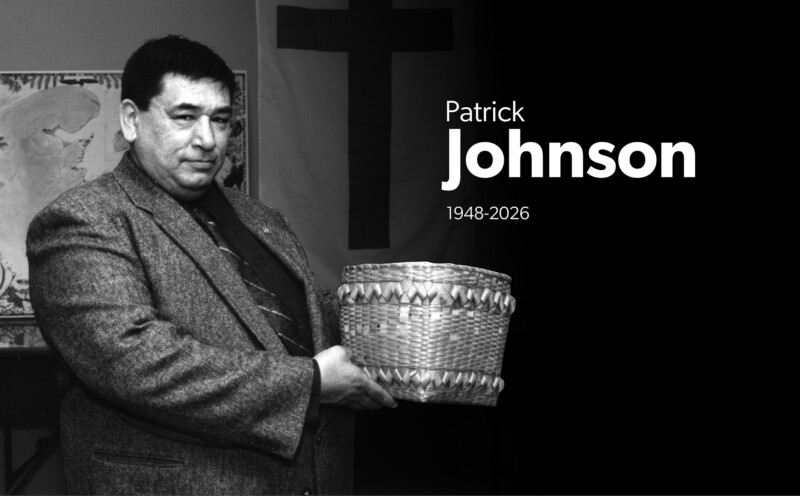
Patrick Johnson graduated from Mabou Consolidated High School in 1968 and earned a BA in Native Studies from UCCB in 1990. He joined the university in 1991 as Mi’kmaq Student Advisor before becoming database specialist for the Mi’kmaq Research Centre, an initiative dedicated to preserving and promoting Mi’kmaq history, language, and culture. Patrick played a central role in expanding the centre as the Mi’kmaq Resource Centre (MRC) in 1998, and continued to build its collections and develop services for students and researchers.
Through his leadership, the MRC became a trusted repository for significant Mi’kmaq artifacts on loan from the Nova Scotia Museum, and strengthened Indigenous scholarship at CBU. Renamed the Sister Dorothy Moore L’nu Resource Centre in 2023, the centre reflects the enduring legacy of Patrick’s work in advancing L’nu education and preserving Mi’kmaq heritage.
Dr. Ronald Caplan C.M.
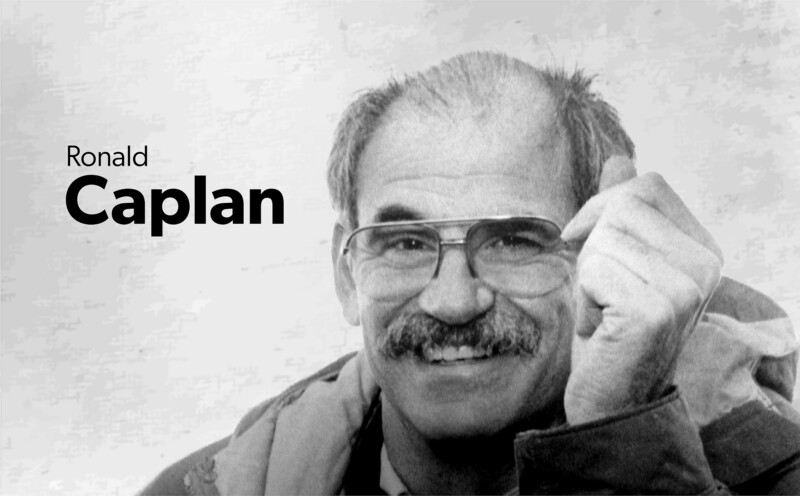
Ronald Caplan was born in Pittsburgh, Pennsylvania. In 1971 he ventured north in a VW van and landed on Cape Breton Island. He founded Cape Breton’s Magazine (1972–1999), interviewing, photographing, and collecting from Cape Breton’s diverse communities, cultures, history, and folklore. Caplan and his assistant Bonnie Thompson documented the lives and traditions of people whose voices may otherwise have been lost.
Continuing to champion local history and culture, since 1986 they have published over 150 Breton Books. Caplan holds a Master of Arts in Atlantic Canada Studies from St. Mary’s University and an honorary Doctorate from Cape Breton University. His recognitions include Nova Scotia’s “Cultural Life Award—Educator,” the Marius Barbeau Award of the Folklore Studies Association of Canada, and the Order of Canada.
Flora MacDonald, PC, CC, ONS (1926–2015)
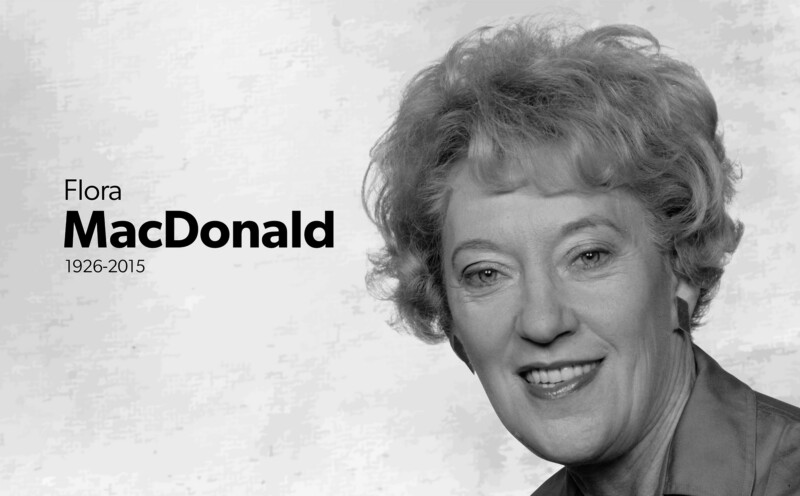
Born in North Sydney, Nova Scotia, The Honourable Flora MacDonald was one of Canada’s most respected political leaders and public servants. Elected to the House of Commons in 1972, she became the first woman to serve as Canada’s Secretary of State for External Affairs. Throughout her career, MacDonald championed human rights, refugee protection, and international development. Although her time as foreign minister was brief, she was involved in high-profile initiatives, including efforts to assist Vietnamese refugees during the late 1970s, and to coordinate the rescue of American diplomats from the Canadian Embassy during the Iran hostage crisis in 1980.
Following a Progressive Conservative victory in 1984, MacDonald returned to government as Minister of Employment and Immigration, and later served as Minister of Communications under Prime Minister Brian Mulroney. After losing her seat in 1988, she shifted her focus to humanitarian work and remained active in global affairs and politics. A recipient of numerous honours and awards, MacDonald was both a Member of the Order of Nova Scotia and a Companion of the Order of Canada. She died in 2015 and is remembered for her dedication to public service, her domestic and international impact, and her role in expanding opportunities for women in Canadian politics.
Men of the Deeps and John C. O’Donnell

Formed in 1966 as part of Cape Breton’s contribution to Canada’s Centennial celebrations, the Men of the Deeps choir was created to ensure that the stories and songs of the miners would not be lost. Composed entirely of men with mining experience, the group has shared Cape Breton’s industrial heritage with audiences across Canada and around the world, including historic tours of the People’s Republic of China in 1976 and Kosovo in 1999. Through recordings, documentaries, and countless performances, they have become internationally recognized ambassadors for Cape Breton’s culture and working-class traditions.
A central figure in the choir’s success was John C. “Jack” O’Donnell (1935–2018), who served as its conductor and musical director for fifty years. A professor of music at St. Francis Xavier University, O’Donnell arranged many of the choir’s signature songs and helped transform the Men of the Deeps into one of Canada’s most celebrated cultural ensembles. His leadership earned him the Order of Canada in 1983, while his work with the choir and his dedication to preserving Cape Breton’s musical heritage were recognized through numerous honours. Together, O’Donnell and the Men of the Deeps ensured that the voices of Cape Breton’s miners continue to resonate far beyond the coalfields. In 2026, the Men of the Deeps celebrated its 60th Anniversary.
Wanda Eloise Robson, D.Litt. ONS (1926–2022)
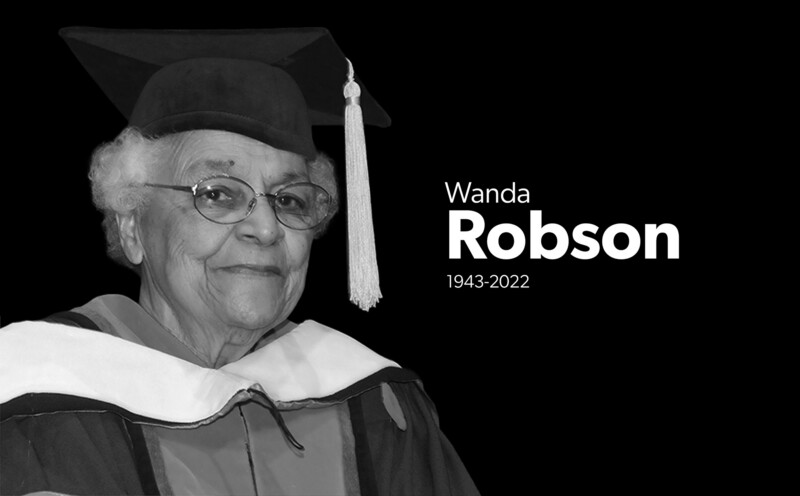
Born in Halifax, Nova Scotia, Wanda Eloise Robson was a civil rights advocate, author, educator, and lifelong champion for social justice. She had three children, and raised them as a single mother until she married Joe Robson in 1971. Robson built a career in the federal public service, and ultimately fulfilled a lifelong dream by earning a Bachelor of Arts degree from Cape Breton University in 2004 at the age of 77. In recognition of her extraordinary contributions to education and human rights, Cape Breton University awarded her an honorary Doctor of Letters in 2011.
As the youngest sister of civil rights pioneer Viola Desmond, Robson dedicated much of her life to ensuring Canadians understood her sister’s story and the history of racial segregation in Canada. Her tireless advocacy helped secure the unprecedented posthumous free pardon granted to Viola Desmond by the Nova Scotia government in 2010 and contributed to the national recognition that ultimately saw Desmond featured on Canada’s $10 bank note. A sought-after speaker, Robson addressed schools and community organizations across the country, served three terms on the Nova Scotia Advisory Council on the Status of Women, authored Sister to Courage, and co-authored along with CBU professor Dr. Graham Reynolds, Viola Desmond: Her Life and Times. Appointed to the Order of Nova Scotia shortly before her death in 2022, Wanda Robson is remembered as a compassionate leader whose determination advanced equality, education, and human rights for generations of Canadians.
Yvonne Cecilia LeVert (1937–2019)
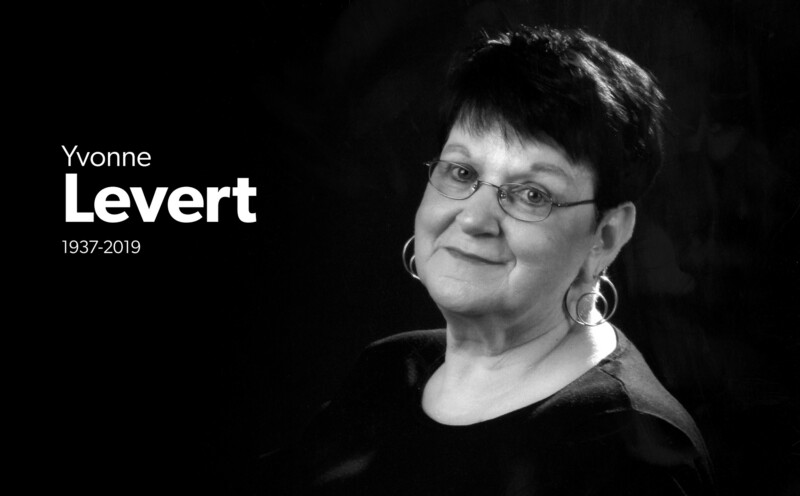
Born in Margaree Forks to Acadian parents Moses and Marie (Doucet) Chiasson, Yvonne LeVert dedicated her life to celebrating food, culture, and education. After earning a degree in Home Economics, she pursued advanced culinary training at the prestigious Le Cordon Bleu Académie de Cuisine de Paris, where she received the Grand Diplôme. Returning to Cape Breton, she shared her passion through teaching, catering, writing, and private cooking classes. She authored and co-authored several well-loved books, including Cape Breton Pictorial Cookbook (1993) and Nancy’s Wedding Feast and Other Tasty Tales (2007), preserving the island’s culinary traditions through recipes, stories, and local history.
From 1984 to 2001, LeVert taught in Cape Breton University’s Bachelor of Hospitality and Tourism Management program, where she mentored students and helped shape hospitality education on the island. In recognition of her impact and dedication to students and community, Cape Breton University renamed its Hospitality Suite in her honour and established the Yvonne LeVert Legacy Award, ensuring that her commitment to excellence, mentorship, and Cape Breton hospitality continues to inspire future generations.
Fr. Donald Campbell

Dr. Fr. Donald Francis Campbell, affectionately known as Father Donnie, was the first president of the College of Cape Breton and an ardent supporter of its growth. He became the principal of Xavier Junior College in 1964 and would see the institution through to university status. Dr. Campbell worked closely with John Terry, the Principal of Nova Scotia Eastern Institute of Technology, to ensure the blending of their institutions would create positive change in Cape Breton. He was a supporter of the Beaton Institute Archives and was instrumental in the creation of the Art Gallery, commissioning the historic murals by Lewis Parker housed in the Great Hall. He retired from the presidency and returned to teaching Psychology in 1982 after the formation of the University College of Cape Breton, saying he had accomplished all he had hoped to accomplish.
