CBU Research Team Helps Uncover 200,000-Year-Old Neanderthal Healthcare Secret
Date Posted: Mar 20, 2026


A ground-breaking new international study has revealed that Neanderthals may have been actively utilizing antibacterial treatments thousands of years before the advent of modern medicine. The research, published in the journal PLOS One, was conducted collaboratively by the University of Cologne, the University of Oxford, the University of Liège and Cape Breton University (CBU). While the physical recreation of these ancient compounds took place in Europe, the crucial biological testing that proved their medicinal efficacy was conducted entirely at CBU.
The study centers on a sticky, resinous substance derived from birch bark, which archaeologists have long known was used by Neanderthals approximately 200,000 years ago. Historically, it was understood primarily as a prehistoric glue, a crucial adhesive used to attach sharpened stone tips to wooden spears for hunting. To investigate the full properties of this substance, the research team, led by Tjaark Siemssen of the University of Cologne and the University of Oxford, collaborated to accurately recreate the ancient compound.
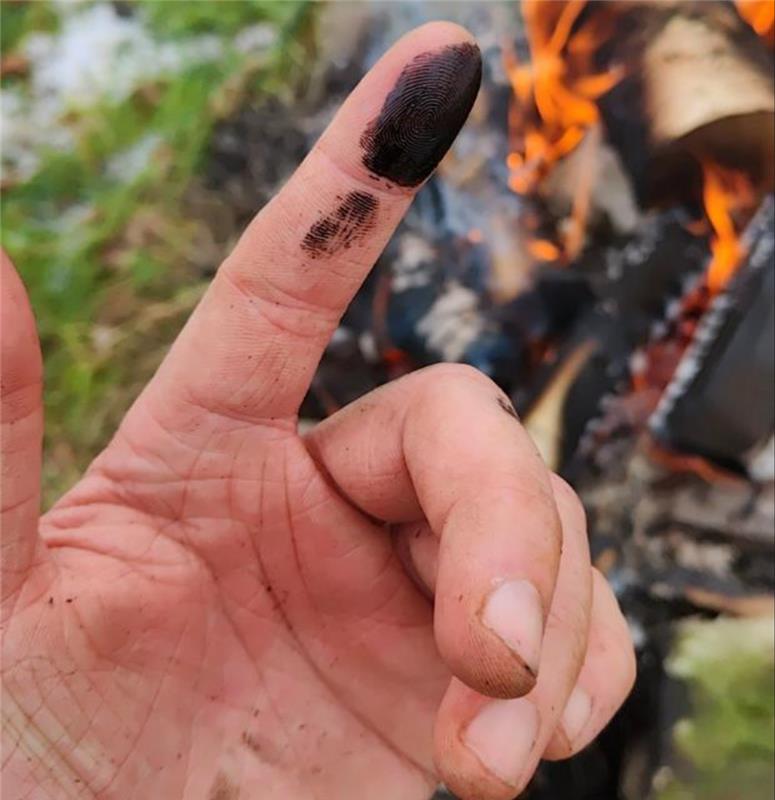 In Europe, Siemssen and his team simulated the campfire techniques of Neanderthals to create what they refer to as “birch tar.” The resulting samples, derived from European birch species, were then securely shipped across the Atlantic to the laboratories at Cape Breton University, where Dr. Matthias Bierenstiel, together with CBU student Research Associate Aderonke Oludare, took over the next phase of the investigation.
Dr. Bierenstiel, a Professor in the Department of Chemistry at CBU, was uniquely positioned to lead this biological analysis due to his extensive background in studying the medicinal properties of birch bark extracts. His previous work has heavily involved validating traditional Indigenous skin remedies made from birch bark. Known to the Mi’kmaq as maskwi, birch bark has served as a cornerstone of the Mi’kmaw traditional pharmacy for generations, used specifically for its medicinal properties.
“He recreated the tar in Europe using two European birch species and sent it to our lab. We analyzed it to determine if it was antibacterial,” says Dr. Bierenstiel. “That is exactly what we proved. The substance Neanderthals made 200,000 years ago, we now know, also possesses antibacterial properties.”
Through rigorous testing, the team successfully demonstrated that the ancient tar recipe effectively kills bacteria. This remarkable discovery suggests a dual purpose for the prehistoric material, revealing that early hominids were likely using it for both sophisticated tool-making and vital wound care.
The ongoing research is now deeply focused on the current global crisis of antimicrobial resistance, an issue that recently ranked as a top concern for the World Health Organization. Traditional hospital treatments are increasingly failing against rapidly evolving superbugs, making the search for new treatments critical. By looking backward in time, Bierenstiel’s team hopes to identify new, complex chemical structures in the “birch tar” that could serve as the foundation for the next generation of antibiotics. To further this research, the lab plans to test if the local species of paper birch trees in Nova Scotia yield similar results to the European samples used in the initial study.
“We have not made the Neanderthal method with our paper birch. So we don’t know. So that’s really the next step,” Dr. Bierenstiel says. “To see if the Canadian trees produce the same level of antibacterial activity when you use that specific ancient fire method.”
This globally recognized study illustrates the strength of collaboration and the value of research conducted at smaller institutions. By bridging the gap between archaeology, chemistry and local ecology, Dr. Bierenstiel and Cape Breton University are showing that world-class, paradigm-shifting science happens in laboratories of all shapes and sizes.